

About this Blog

About Richard Beard I figured out the software by translating a very short book by Andre Maurois, now available under the Translation tag above. This means I can move on to whatever else is on my mind. If I run out of ideas, the next pre-computer age blog I plan to translate is another very short book, this one by Henry Miller, also in French, entitled I’m No More of an Idiot Than Anybody Else.

Living in a Library

‘…  cakes and biscuits will be provided free of charge.’

It’s a deal. In fact it was a deal before the final incentive. I’ll be spending February in Gladstone’s library on the Welsh border not far from Liverpool. There is a fairytale quality to the idea of a residential library, a sense that anybody who chooses to stay the night is not only living with the books, but also somehow in the books. Who knows where a library dream will go at night?

I’m about to find out, mostly thanks to the energy of William Ewart Gladstone himself. Into his eighties, past even his old man’s prime as the Grand Old Man, he founded this library so that his books, and subsequent scholars, should be able to share a home. He transported many of his 32,000 volumes by wheelbarrow from his house at Hawarden, and of those 32,000 books he annotated about 18,000. The man is in his books, the books are in the library, and during February I’ll be there too.

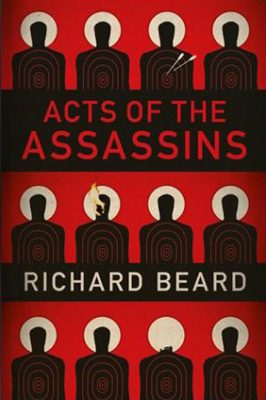
I’ll be finishing off a novel, Acts of the Assassins, which is a kind of sequel to Lazarus is Dead. Many of the books from Gladstone’s collection are works of theology, and part of the liberal revival is to understand that spiritual questions are not made moot by the rise of science. The challenge is to reframe these questions so that they seem relevant in a modern context.  This is partly what I’ll be talking about in a lecture on February 5th. What can theology teach fiction, and what can fiction learn from stories that start a religion? How are different versions of a story the same story?

Towards the end of my stay, on Saturday 23rd February, and wearing my hat as Director of the National Academy of Writing, I’ll be offering a day-long Creative Writing workshop. The aim will be to create a checklist of what any type of story (no matter the genre, fiction or non-fiction) needs to function. Once the ingredients are in place, there are some helpful procedures to improve the draft that appears on the page.

Both these events are open to the public, and places can be booked here.

Otherwise I’ll be dreaming those dreams, otherwise known as writing a novel.


Gladstone’s library ‘comprises a residential library and meeting place which is dedicated to dialogue, debate and learning for open-minded individuals and groups, who are looking to explore pressing questions and to pursue study and research in an age of distraction and easy solutions.’

Share

For One Night Only

Now this looks good. We’ll be reading at The Water Poet in Spitalfields on Monday December 3 at 7pm. Entry is free, and what can you get for free these days?

In this case, you get Keith Ridgway, Stuart Evers, Greg Baxter. You get each one of us introducing one of the others and then reading a little. Rolling around some words. You get a chance to drink and yak between the readings. You get literature off-screen, off-grid, off-line – the writers and the words in a convivial three-dimensional space, real, live and for one night only.

Not available as a download.

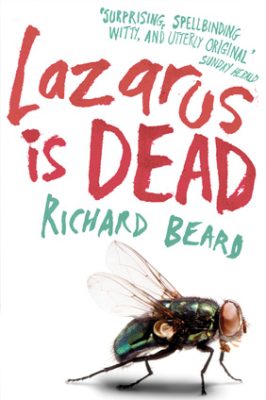
Lazarus is Dead (Richard Beard, published by Harvill Secker): ‘extraordinary’ (Sunday Herald), ‘compelling’ (Sunday Times), ‘impressive’ (FT)

Hawthorn and Child (Keith Ridgway, published by Granta):
‘breathtakingly unpredictable’ (Guardian), ‘brilliantly well done’ (Irish Times)The Apartment (Greg Baxter, published by Penguin):
‘superbly elegant’ (The Times), ‘exceptional’ (Hisham Matar), ‘Clever, entertaining, brave’ (Roddy Doyle)

If This Is Home (Stuart Evers, published by Picador):
‘A quiet triumph’ (The Observer), ‘assured and unsettling’ (Daily Mail), ‘captivating’ (The Times)

Full details here.

Share

Cappuccino, no sock-puppets

I’m a judge for this year’s inaugural Costa Short Story Award. There, interest declared, but one of the reasons I wanted to join in was the anonymity of the entries. There’s a mystery to who has written each story, but there shouldn’t be any mystery about the judging. As with reviews on Amazon, it helps to know who’s who and who knows who and who’s doing what.

Right. The award is open to anyone who has written a short story, whatever their publishing history, and the deadline for entries is Friday 7 September.

There are then three stages to literary glory:

1. All the entries will be sent anonymously to a group of readers, who will sort out the sixty stories that in their opinion are the most likely winners of the prize. For guidance, the general Costa Book Awards website claims to ‘recognise some of the most enjoyable books of the year’. The vagueness of that ‘enjoyable’ should be reassuring, whatever the length of the fiction.

What could go wrong (who can you blame)? The initial group of readers may be insufficiently diverse, with tastes too limited to appreciate the varied qualities of the stories they encounter. That’s a risk. The anonymity of the texts at least ensures that the story on the page will take precedence over other considerations. Reputation counts for nothing when no-one has a name.

2.The sixty stories these initial readers like best will be passed on to a panel of five judges. Anonymously.

What could go wrong (who can you blame)? The judges may be idiots. We come each with our flaws, but at least we’re not secretly unified in favour of a certain type of story.  I’ve met only one of the other judges and that only briefly. Anything else? It’s possible that a published writer with a distinctive voice might be recognisable by their style, in which case prejudices would apply as if the writer’s name were inked beneath the title. But then again the story could be written by an imitator, someone so influenced that they only sound like the distinctive writer. Heads down, back to the story. If it succeeds, it’s still a top story – if anyone thinks it’s simple to write like Lorrie Moore then go ahead, make everyone’s day.

3. The six stories the judging panel like best will be posted online (anonymously) on the Costa Book Award website. The public can download these stories and vote for their favourite. Think your taste is better than most judging panels? Fed up of shortlists where the wrong winner is chosen? This is a chance to do something about imposing your own taste as a reader on a major literary prize.

Or, in a world where everything can go wrong (oh why didn’t I win, again) the vote can be manipulated by whichever shortlisted author is most attuned to the virtual world. At this stage the anonymity breaks down slightly – the shortlisted writers will recognise their own stories. In fact, they’ll be told in advance, and may now mobilise an army of sock-puppets to vote on their behalf.

It could happen but it won’t be easy. The voting system on the Costa website allows for a single vote per email address (apparently on tv shows one person can vote as often as they can afford). Authors will be asked directly to retain their anonymity, and Costa (a bit scarily) will be monitoring social media for suggestions of authors breaking cover to influence supporters. Action will be taken (grrr). Costa will also be looking out for unusual voting trends and spikes. There will be no excuse, no gummy sock-puppet in one hand saying ‘I didn’t know, everyone does it’ while the author’s lips barely move.

Always, there’s something that can go wrong – many short stories are about exactly that subject. But in my opinion this voting system is a sincere attempt to allow the stories to speak for themselves, standing up to judgment without fear or favour. Let’s see how it goes, because when the the six shortlisted authors are revealed (Ta-da! In late January 2013) it’s going to be a bigger surprise than hearing a winner. A surprise to some if the shortlist is full of well-known authors; a surprise to others if it’s not.

Share

Book Covers

What now?

There’s something odd about the proverbial ‘don’t judge a book by its cover’. The saying implies that book covers were once a byword for rubbish design, and consistently misrepresented the content or quality of the book inside. Or perhaps the saying dates from the days before design, and means don’t expect every story to be leathery and monochrome. I don’t know.

What I do know is that writers have difficult relationships with their covers. Partly this is because the covers are using a visual language in which the writer may not be literate – I may have written a paragraph about an important tree, but on the cover it’s just a tree. It is brown. What is a potential reader supposed to understand from that?

It’s also hard to know what to make of a new cover because publishers are always ‘thrilled’. This means they’re finished, they have something to show, but through decades of industry misuse everyone must be thrilled. Hope you like it as much as we do.

And as it happens I do indeed, very much, like the new cover for the American edition of Lazarus is Dead. I feel most mornings like this stick-man Lazarus, wondering if it’s safe to come out. There’s so much life out there, it would seem churlish not to take another step.

Europa Editions, Lazarus is Dead

Share

50 Shades of Black

Plain black swan black wine black fashion black Leb black jet burnt black at midnight.

Medium black velvet black hat black coat black shoes black eye black eyes black eye.

Benjamin Banville Black and Conrad Moffat Black with Green and Blacks back Captain Black the blackguard.

Dahlia black sacks on matt black tarmac. Ninja black on code black black ops bruised black by crow black oppo.

Strong black deep black coal black tyre black road black boot black bin black black black black. Fast show black.

Cat black and bible black even the eye of a pea. Nothing black, all black, empty black, soul black. Serious black.

Extra black, extra extra black. Hole.

Share